Serving Staff Ratios for Sit-Down Corporate Dinners: 1 Server per 8 Guests Protocol (2026)

Co-Founder & CTO, Venura
Build tiered menu packages, 1-tap WhatsApp quotes & track due payments.
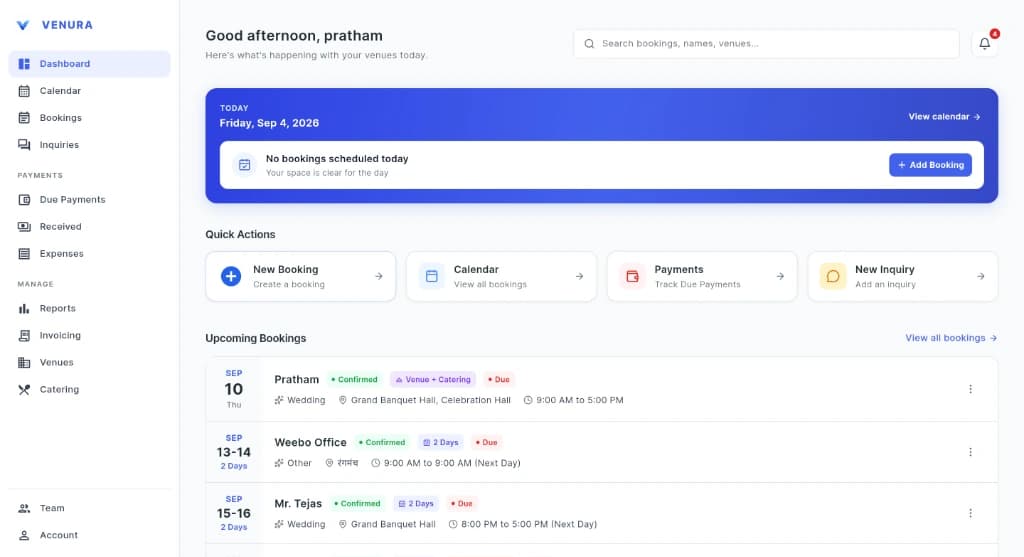
Venura Catering OS replaces kitchen chaos with automatic menu portioning, zero-loss advance tracking, and WhatsApp billing.
Serving Staff Ratios for Sit-Down Corporate Dinners: 1 Server per 8 Guests Protocol (2026)
The 1:8 Service Ratio Protocol for Formal Plated Dinners
Why formal corporate dinners demand high steward density:
- 1Synchronized Table Service (1 Server per 1 Table of 8–10 Guests): Each round banquet table is assigned a dedicated uniformed steward who serves all seated guests simultaneously from the left side and clears empty plates from the right side in under 90 seconds.
- 2The Table Captain Hierarchy (1 Captain per 4 Tables / 32–40 Guests): Table captains coordinate timing between the central plating kitchen and floor stewards, ensuring courses are fired exactly when the keynote address concludes.
- 3Dedicated Beverage & Wine Stewards (1 Sommelier / Beverage Server per 30 Guests): Responsible exclusively for pouring sparkling water, craft mocktails, and wine, ensuring guest glasses never remain empty.
Staff Deployment Matrix (300-PAX Corporate Awards Gala)
The table below outlines complete service staff deployment for a 300-delegate formal sit-down corporate dinner (30 round tables of 10 guests):
| Service Role / Department | Deployment Ratio | Staff Count (300 PAX) | Core Operational Responsibilities |
|---|---|---|---|
| Table Service Stewards | 1 Server per 1 Table (10 Guests) | 30 Uniformed Stewards | Synchronized course serving, bread basket replenishment, table clearance |
| Floor Table Captains | 1 Captain per 4 Tables | 8 Senior Captains | Floor timing oversight, VIP guest requests, dietary accommodation |
| Beverage & Water Stewards | 1 Server per 3 Tables | 10 Beverage Servers | Continuous pouring of chilled sparkling water, juices, and wine |
| Backstage Food Runners | 1 Runner per 3 Tables | 10 Plating Runners | Transporting cloche-covered hot plates from kitchen to service stations |
| Kitchen Plating Line Cooks | Assembly Line Model | 12 Line Cooks | Precision plating, sauce garnishing, and heating cloches to 75°C |
| Scullery & Dishwashers | Continuous Wash Cycle | 8 Scullery Stewards | High-temperature glass sanitization and fine china wash cycles |
| Total Hospitality Crew | 1:3.8 Overall Ratio | 78 Hospitality Staff | Guarantees synchronized 4-course dinner within 55 minutes |
The 4-Step Synchronized Plating & Service Sequence
Executing a flawless course transition across 30 tables:
- Step 1: The Kitchen Fire Call: The banquet manager signals the kitchen 10 minutes before speeches conclude; 12 cooks assemble 300 plates onto heated service trays.
- Step 2: Table Positioning: 30 stewards position themselves behind their assigned tables holding 2 cloche-covered plates simultaneously.
- Step 3: Synchronized Placement: On the Banquet Captain's discreet hand signal, all 30 stewards place plates in front of guests from the left side simultaneously.
- Step 4: The 2-Minute Clearance Sweep: Once all guests at a table finish, the steward clears all soiled plates from the right side within 2 minutes.
Managing Staff Scheduling & Labor Costs with Venura OS
Venura streamlines event labor management:
- Staff Counter Calculator: Computes exact steward, captain, and runner requirements based on service style (Buffet vs Plated) and guest PAX.
- Digital Shift Rosters & Payouts: Logs biometric / mobile attendance and computes wage payouts mapped directly to your event P&L ledger.
VIP Head Table & Dignitary Protocol Management
Executing elevated white-glove hospitality for executive VIP tables:
- 11:4 Dedicated VIP Steward Ratio: Deploy 1 senior tuxedo-clad butler for every 4 VIP guests at the main head table.
- 2Personalized Dietary Coordination: Verify exact dietary restrictions (low sodium, vegan, nut allergies) directly with corporate liaison officers prior to the first course fire call.
- 3Discreet Beverage Refills: Ensure sparkling water and premium wine glasses are replenished without interrupting keynote speaker presentations.
Post-Event Scullery Turnaround & Tableware Auditing
Protecting fine bone china and crystal glassware during high-speed clearance:
- 1Partitioned Scullery Wash Racks: Glassware and dinner plates are placed directly into 25-compartment wash racks, eliminating manual re-stacking.
- 2Breakage Loss Logging: Floor supervisors log cracked cloches or chipped porcelain in Venura OS, generating automated vendor damage reports.
- 3Tally Prime Payroll Export: Direct export of steward daily wage disbursements into Tally Prime XML ledgers.
Staff Uniforms & Grooming Parade Before Shift Opening
Enforcing 5-star service presentation across all stewards:
- Mandatory Pre-Shift Grooming Parade: Banquet captains inspect tailored black waistcoats, polished non-slip formal shoes, trimmed fingernails, and hairnets 45 minutes before dinner.
- Allergen Briefing: Staff are briefed on menu ingredients and specific dietary requests for VIP head tables.
- Venura Staff Rosters: Automated logging of steward shift hours and gratuity distributions mapped directly to event expense ledgers.
Catering Staff Counter Calculator
Calculate exact service stewards, station chefs, and scullery labor required by guest count.
Sumeet Yadav
Co-Founder & CTO, Venura
Systems architect specializing in GST compliance automation, Tally Prime ledger synchronisation, and enterprise financial access control for Indian hospitality and catering enterprises.
Common Operational Questions
What is the standard server-to-guest ratio for a sit-down corporate formal dinner?
For a formal sit-down plated dinner, the industry standard ratio is 1 dedicated service steward per table of 8 to 10 guests (supplemented by 1 captain per 4 tables and dedicated beverage runners), ensuring synchronized course delivery.
How does silver service differ from buffet catering in terms of labor requirements?
Buffet catering requires a modest ratio of 1 server per 25 to 30 guests. In contrast, formal plated silver service requires 1 server per 8 to 10 guests—nearly 3x higher staffing density to handle pre-plated course delivery and synchronized table clearing.
What is the standard rule for serving and clearing plates in formal dining?
Under classical French and Continental banquet service rules, all food courses are served from the guest's left side with the server's left hand, while all beverages and soiled plates are cleared from the guest's right side.
How does catering software calculate service staff requirements?
Venura Catering OS includes a dedicated Staff Counter Calculator that computes exact numbers of service stewards, station captains, runners, and dishwashers based on event headcount and service format.
Put These Systems to Work in Venura Catering OS
Stop relying on fragile manual registers and Excel sheets. Run your entire booking pipeline, advance collection, and staff permissions on Venura.
Table of contents
Book a demo→
Get a personalized demo tailored to your use case.
Ready to modernize your event business?
Explore the Venura ecosystem or speak with our team.